

The Living Station
A forgotten rail station. A community with everything but space. This project restores both, reclaiming Caimalito’s historic station as a civic commons rooted in culture, ecology, and the everyday rhythms of its residents.
Site Analysis
Caimalito is a small riverside community in Risaralda, Colombia, located along the Cauca River just outside of Pereira. The area sits within the UNESCO-recognized Coffee Cultural Landscape, rich in biodiversity and agricultural heritage. Despite this, the community is economically marginalized with limited public infrastructure and few opportunities for local economic growth. At its center sits a historic rail station, long abandoned and long overdue for reinvention.


A - Bridge
B - Park
C - Fire Station
D - Abandoned Station
E - School Yard
F - Playground
G - Rail Line
H - Residential Housing
Surrounding Context
The site is a narrow, tapering strip adjacent to the historic station, bounded by road to the north and community fabric to the south. Its linear geometry drove a clear east-west program spine. Risaralda’s tropical wet climate shaped every design decision. Permeable paving manages stormwater, dense canopy regulates heat, and biophilic integration functions as climatic infrastructure. Existing trees were treated as anchors, and all programs were organized around them.

User Group Collages
These collages depict the neighborhood’s regular users and energy, and trace their journeys to the site. Many of the site’s daily users include fishermen, farmers, cyclists, and families.


Site Plan

This adaptive reuse project restores the station and surrounding landscape as civic infrastructure that strengthens community identity and ecological health. Biophilic design principles treat nature as essential infrastructure, while cultural programming creates economic opportunities that directly benefit residents.

Key:

1. Heritage Path: An annual community painting tradition along the site’s border, building cultural identity and local pride.
2. Amphitheater: A terraced gathering space for performance, fitness, and community gardening with integrated garden beds at its uppermost tier.
3. Fountain: A communal water feature welcoming residents and local wildlife, designed as a place of rest, play, and daily activation.
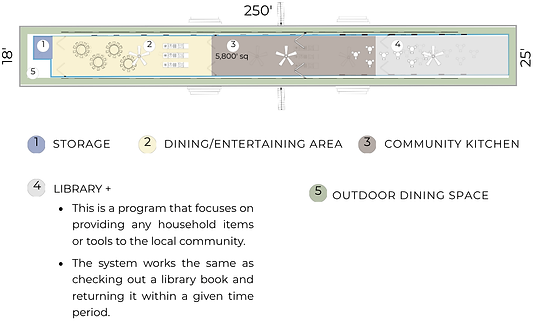
4. Community Hub: The restored rail station reimagined as a shared home, offering communal kitchens, dining, and a library of things for the whole community.
5. Gallery Walls: Open-air brick walls where local artists display and sell their work, generating economic opportunity while enriching the site’s cultural landscape.
6. Bike Lane: A dedicated cycling corridor connecting the site to the broader community and encouraging slow movement through the space.
Building Programming
Perspective Collages
These collages illustrate the mood and feel of the designed programs. Each collage tells a unique story and reveals the narrative of the design.
Heritage Path
Once a year, residents and local artists reclaim the road bordering the site with color. The Heritage Path is less a physical trail than a living tradition, a rotating canvas that builds cultural pride, marks time, and makes visible the identity of the people who call Caimalito home.

Gallery Walls
The brick gallery walls activate the site’s edges as an open-air market for local art. Artists sell and display work directly to visitors, creating real economic opportunity while layering the landscape with cultural texture. The walls are the community’s gallery, no admission required.


Fountain
The fountain anchors the site as a place of pause. Designed to welcome both residents and local wildlife, it is a shared threshold, where children play, neighbors linger, and birds come to drink. Water here is not ornamental; it is communal.
Amphitheater
More than a performance space, the amphitheater is a daily destination. Its terraced steps invite gathering, rest, and movement, while garden beds integrated into the uppermost tier put food production in the hands of the community. It is architecture that works as hard as the people who use it.

Community Hub
The restored rail station becomes an extension of every home in Caimalito. Shared kitchens, communal dining, and a library of things, tools, gadgets, toys, games, books make the station a place where resources circulate freely, and neighbors become family. It is the village commons, re-imagined.

